
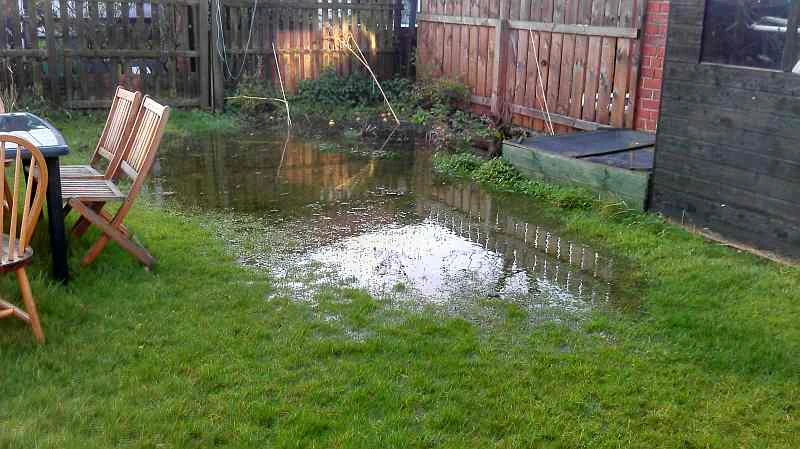
If your yard’s feeling more like a swamp than a sanctuary, you’re probably looking into drainage solutions.
You’ve likely heard of French drains and trench drains, but what’s the difference between the two — and which one is best for your needs?
At Grow Landscape Yard, we know proper drainage is key to keeping your outdoor space healthy and your home protected. In this guide, we’ll break down the differences, benefits, and best use cases for French drains and trench drains to help you choose the right solution.
🌧 What Is a French Drain?
A French drain is a subsurface drainage system designed to move excess water away from areas where it can cause damage – like around foundations, under lawns, or behind retaining walls. It’s typically made up of a gravel-filled trench with a perforated pipe (ag pipe) running through it. Water seeps into the trench, flows into the pipe, and is then redirected safely away from your home or garden.
✅ Benefits of French Drains:
- Prevents water buildup near building foundations
- Helps manage soggy lawns and gardens
- Reduces the risk of basement flooding
- Minimises soil erosion
- Great for sloped or hilly properties
French drains are particularly useful when you’re dealing with groundwater or consistent sogginess in your soil – not just surface puddles.
🔍 Types of French Drains
French drains aren’t one-size-fits-all. Here are a few common variations:
- Curtain Drains: Hidden below the surface, ideal for redirecting water across a lawn.
- Collector/Interceptor Drains: Handle both surface and groundwater, often connected to underground piping.
- Filter Drains: Specifically designed to target and remove groundwater.
- Dispersal Drains: Used in septic systems to distribute treated water safely.
- Fin Drains: Narrow, cost-effective versions using a thin vertical membrane — great for garden beds and retaining walls.
🏗 A Brief History of the French Drain
Despite the name, French drains aren’t from France! They were popularised in the 1800s by American judge and farmer Henry Flagg French, who introduced them in his book on farm drainage. Originally simple gravel-filled ditches, they’ve evolved into highly effective, modern water management tools.
🚰 What Is a Trench Drain?
Unlike French drains, a trench drain (also known as a channel drain) is a surface drainage system. It’s made by cutting a long, shallow trench into the ground and covering it with a grate. These drains quickly collect and move surface water from paved areas, driveways, patios, or commercial zones.
They’re commonly used in:
- Driveways and garage entrances
- Patios and pool decks
- Car parks and walkways
- Industrial and commercial areas
✅ Benefits of Trench Drains:
- Instantly collects heavy surface water
- Reduces flooding and water pooling on hard surfaces
- Keeps paved areas dry and safe
- Easy to access and clean
🔨 Types of Trench Drains
There are several styles of trench drains depending on materials and installation method:
- Cast-in-Place Drains: Built on-site using wood or metal moulds. Durable but labour-intensive.
- Precast Concrete Drains: Manufactured off-site using polymer concrete. Strong and easy to install.
- Former Systems: Lightweight formers (like cardboard) are used to shape the trench during construction.
- Linear Drains: Made from materials like fibreglass, steel or structural plastic. Often modular for easier installation.
🆚 French Drain vs Trench Drain: What’s the Difference?
Here’s a quick comparison to help you see how these two systems differ:
| FEATURE | FRENCH DRAIN | TRENCH DRAIN |
|---|---|---|
| Placement | Underground | Surface level |
| Water type | Ground water | Surface water |
| Common use | Around foundations, under lawns, in gardens | Driveways, patios, commercial areas |
| Appearance | Hidden | Visible grate cover |
| Materials | Gravel, perforated pipe | Grate, trench, concrete or plastic base |
🤔 Which Drainage System Do You Need?
Still not sure which system is right for you? Here’s a simple rule of thumb:
- Choose a French drain if you’re dealing with soggy soil, water seeping into your basement, or erosion near your foundation.
- Opt for a trench drain if your problem is surface-level — like pooling water on driveways, patios, or walkways.
In many cases, both systems can work together to provide full-coverage drainage. A trench drain might capture surface water and divert it to a French drain that handles deeper ground saturation.
Grow Landscape Yard — Your drainage experts, rain or shine.